
The new Recovery Campus will provide a broad range of health and supportive services designed to help break the cycle of addiction, dependency, and homelessness
By MIKE WILEY
Publisher
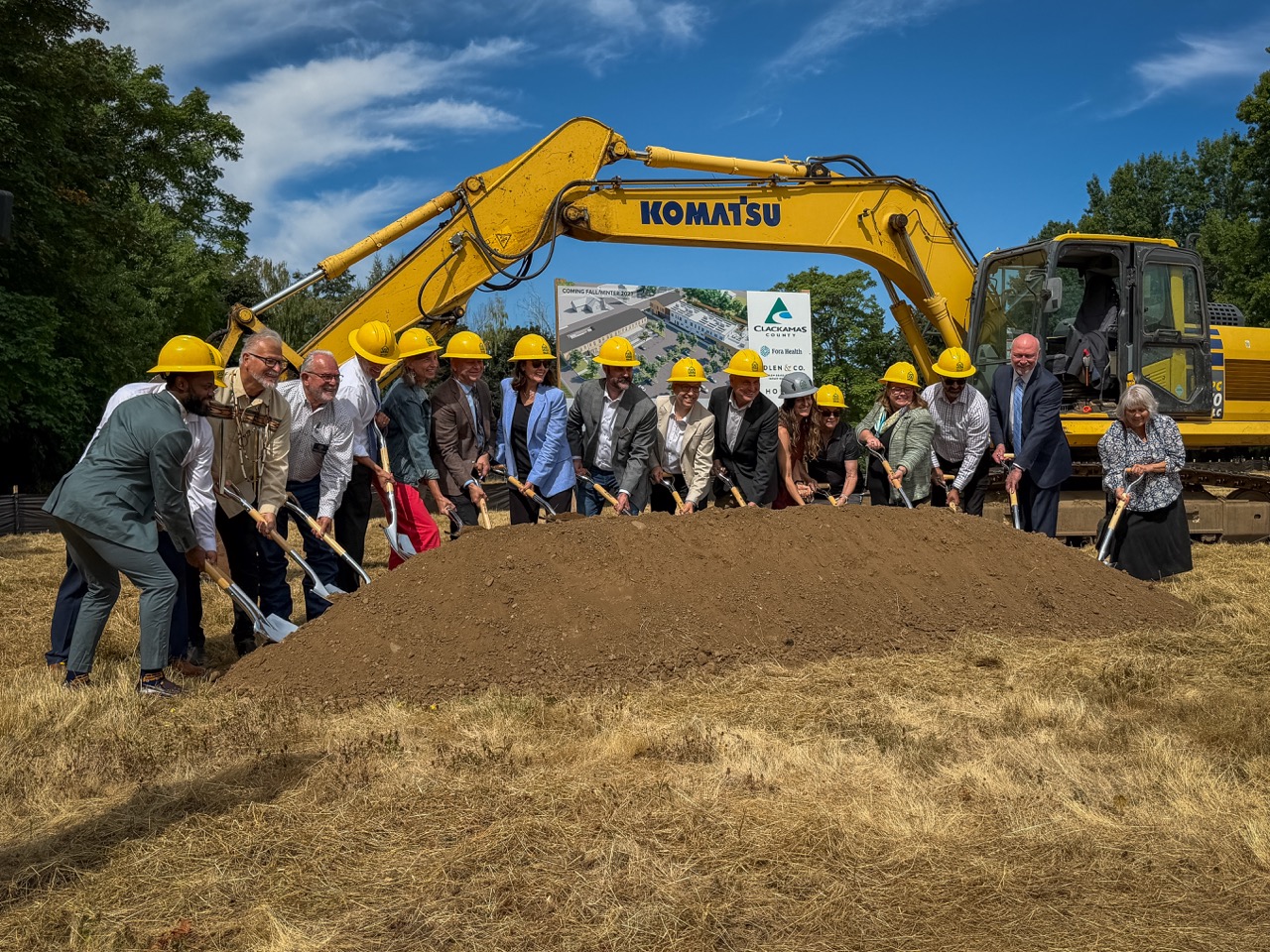
FOR Clackamas County Commissioner Ben West, the ceremonial shovels that turned dirt July 29 at the future Clackamas County Recovery Campus represented much more than the beginning of another government construction project.
They marked a tangible step toward a different way of confronting addiction, homelessness and mental illness—one that West, a registered nurse, has advocated since joining the County Commission.
“This future Recovery Campus is going to be the crown jewel of the county’s recovery-oriented system of care,” West said at the groundbreaking. “It’s a place for critical services and supports to help individuals, families and communities recover.”
Former school property
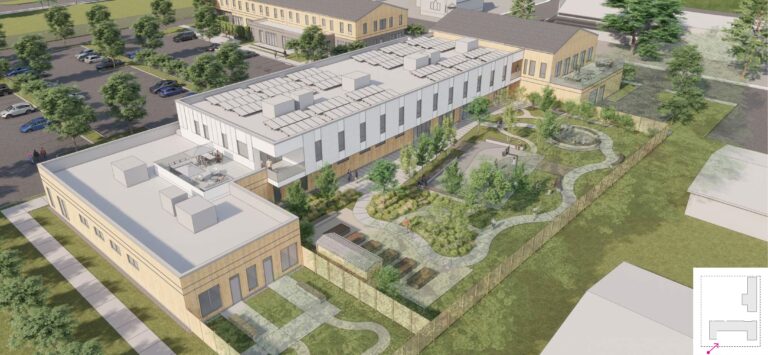
The campus will be built on the six-acre former Clackamas Elementary School property at 15301 SE 92nd Ave. in Clackamas. When completed, it will bring detoxification, addiction treatment, mental-health care, transitional housing and other recovery services together at one location.
West was joined by Gov. Tina Kotek, other county commissioners, state and regional officials, treatment providers and community members for the ceremony. State government directed $10 million in state funding toward the project—money that allowed Clackamas County to advance its full vision for the campus rather than building it incrementally.
The project has been long anticipated. Clackamas County adopted its Recovery-Oriented System of Care in April 2023, envisioning a coordinated network that would help people move from addiction and crisis toward sustained recovery. Later that year, experts participating in the county’s Addictions Recovery Summit identified a comprehensive recovery campus as a critical missing piece.
The county purchased the former school property for $3.5 million in October 2024 and subsequently selected Portland-based Fora Health as the campus developer and service provider.
West a strong advocate
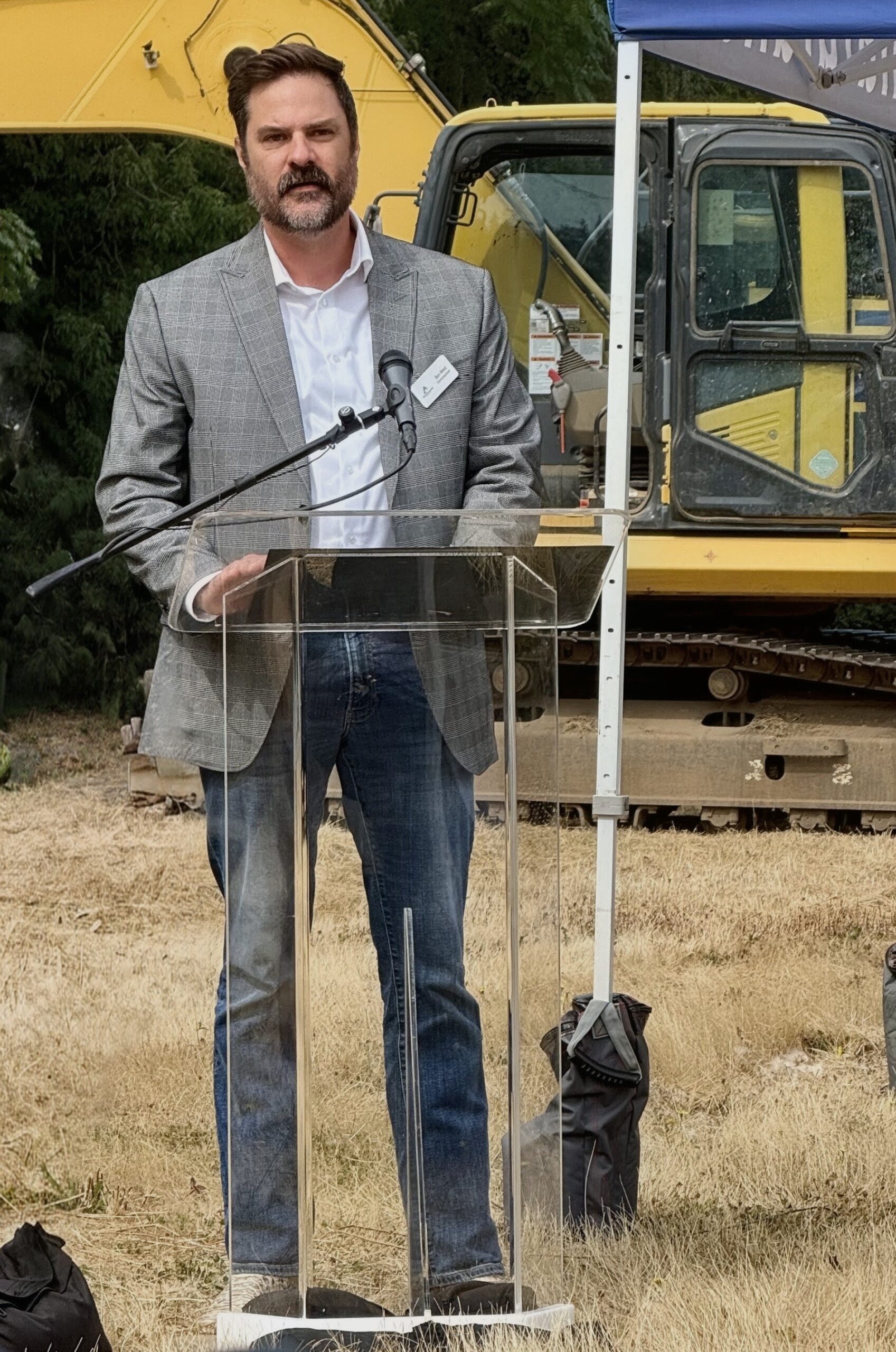 West has been among the project’s strongest advocates throughout that process. His support is rooted partly in his experience as a registered nurse, where he encountered patients cycling repeatedly through emergency departments and other parts of the medical system without receiving the long-term treatment and support needed to change their lives.
Providing someone with a roof may address the immediate lack of shelter, West argues, but it does not by itself treat addiction, serious mental illness or the other conditions that may prevent a person from remaining successfully housed.
That philosophy distinguishes Clackamas County’s approach from the broad “housing first” policies commonly associated with neighboring Portland and Multnomah County. West supports housing, including transitional and veterans housing, but believes it should be connected to treatment, accountability and a path toward independence.
The Recovery Campus is intended to provide that path.
The first of its two buildings will house clinical services, including medically supported withdrawal management, commonly called detox; stabilization; mental-health treatment; residential addiction treatment; medication-assisted treatment; care coordination and peer support.
Will add 76 beds
 A second building will offer outpatient services and transitional housing for people who have completed the more intensive stages of treatment but are not yet ready to return fully to the community.
Together, the buildings will add 76 beds to the county’s behavioral-health system: 16 withdrawal-management beds, 24 residential-treatment beds and 36 transitional-housing beds.
“What sets this campus apart from other recovery centers is on-site transitional housing to help people build their recovery capital and re-enter the community,” West said.
That transition can be one of the most precarious points in recovery. A person may complete detoxification or a short residential program only to return to the same environment, relationships and pressures that contributed to the addiction.
At the campus, residents will be able to remain connected with outpatient treatment, peer mentors and other services while developing employment skills, restoring family and community relationships and preparing for stable housing. Depending upon individual needs, a person’s involvement with the campus could last as long as 18 months.
The campus will not be a homeless shelter, drop-in center or place where people can openly use drugs. Participation will be voluntary, but those admitted must have a substance-use disorder and commit to recovery. Referrals may come from hospitals, families, treatment providers, first responders, law enforcement and mobile crisis teams.
West believes the center can also reduce the number of people with untreated addiction who repeatedly end up in emergency rooms or jail—expensive institutions that are poorly suited to provide long-term recovery care.
The approximately $31 million secured for the project includes $13.5 million from the regional Supportive Housing Services measure, the state’s $10 million allocation, $5 million in state lottery bonds secured with the help of Rep. April Dobson and $2.5 million in congressionally directed funding.
Governor praises
The governor called the campus an example of what can happen when state, regional and local officials share a common objective.
“The campus will save lives and provide hope for so many when it opens next year,” she said.
Construction is expected to be completed in late 2027.
For West, however, the project is not simply about constructing two buildings or adding 76 beds. It is about creating a place where people are not merely moved out of sight or stabilized temporarily, but given sufficient time, treatment and support to rebuild their lives.
The county’s stated goal is for those leaving the campus to be housed and healthy, connected to a supportive community and pursuing a sense of purpose through employment, education or other productive activity.
That is the outcome West has kept before the county through years of planning, funding discussions, neighborhood meetings and negotiations with state officials.
Now, after years of talking about what a comprehensive recovery system could look like, Clackamas County has begun building it. HVN